Mission Commander Protocol
A proprietary classroom management system engineered to ensure equity, leadership rotation, and gender parity in every technology session.
What Makes Us Different
Not just a teaching method. A structural intervention that guarantees equal participation.
The Badge
A physical, designated "Mission Commander" badge worn by the student currently leading the team. It transforms leadership from an informal dynamic into a protocol-governed role.
Final Authority
Only the student wearing the badge makes final technical decisions for the group. The Commander's word is final during their tenure.
Rotating Leadership
The badge rotates every 15-20 minutes, ensuring leadership does not accumulate around a single individual or gender.
50% Female Leadership Time
The rotation is deliberately structured to ensure girls hold the badge for exactly 50% of class time. This is not left to chance—it's engineered.
What We Observed
Through extensive classroom observation, we documented a persistent pattern: in mixed-gender technology environments, boys dominate the equipment while girls retreat into note-taking and observational roles.
Key Findings:
- Boys interacted with hardware 78% of class time
- Girls were relegated to observation 82% of sessions
- Girls spoke less frequently even when they knew the answer
The problem wasn't ability or interest—it was socialized behavior that needed structural correction.
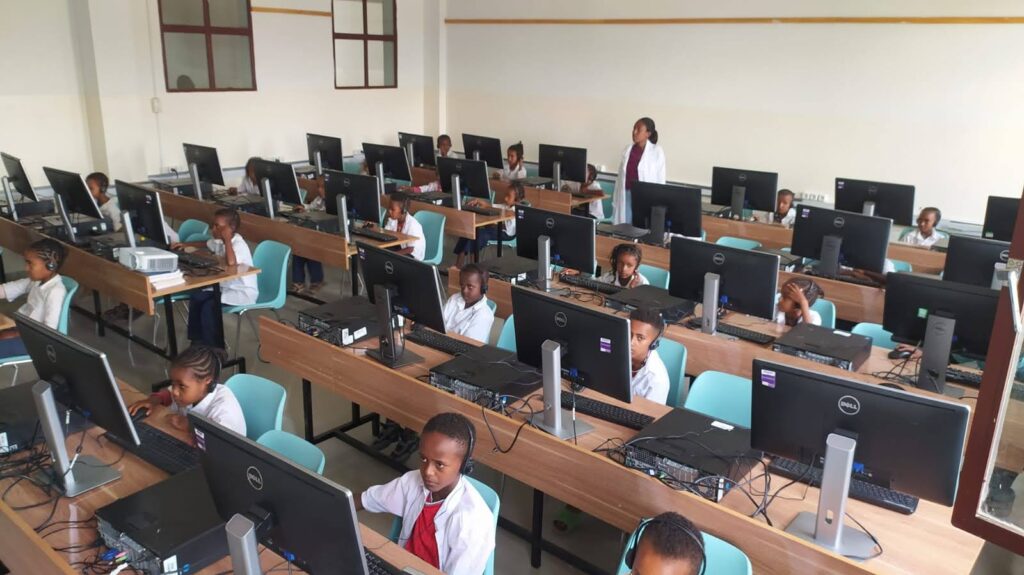
Mission Commander Protocol: The Three Rules
Simple, enforceable, transformative.
Authority
Only the student wearing the Mission Commander Badge is authorized to make the final technical decision for the group.
Decisions include: "We use this loop structure," "We delete this code block," "We implement this feature first."
Rotation
The badge rotates every 15 to 20 minutes, ensuring leadership does not accumulate around a single individual.
Multiple students experience the Commander role within a single session.
Equity
The rotation is deliberately structured to ensure girls hold the badge for 50% of class time.
Non-negotiable. Embedded in the session plan. Measured and enforced.
The Mission Commander Badge
The badge is not a symbolic gesture—it is a tangible, visible marker of authority that makes the classroom power structure explicit and transparent.
- Visible: Everyone knows who leads at any moment
- Transferable: Passed between students every 15-20 minutes
- Empowering: Carries genuine decision-making authority
- Democratizing: Leadership is earned through the protocol, not social privilege
Mission Commander
COMMANDER
How It Changes Everything
The Protocol reshapes the social contract of the classroom.
For Girls
- Develop the muscle memory of leadership — the confidence to make decisions and direct peers
- Experience being the one "driving" the computer — making decisions, executing code, owning outcomes
- Skills improve faster because active engagement produces deeper learning than passive observation
- Leadership by young women becomes expected, not exceptional
For Boys
- Develop the habit of following female leadership — directly challenging implicit bias
- Experience being led by a girl who is technically competent and decisionally authoritative
- Learn that leadership is about the role, not gender
- Develop collaboration and followership skills — equally valuable for career success
Research & Results
The Protocol is grounded in educational psychology and proven through measurable outcomes.
Increase in girls' hands-on engagement with technology
Of girls report increased confidence in technical leadership
Of boys report changed perceptions about female leadership in tech
Educational Psychology Foundation
The Protocol draws on established research in social learning theory, stereotype threat reduction, and experiential learning. By structurally engineering leadership opportunities, we bypass the need for individual behavior change—the environment does the work.
Tech Guide Implementation Guidelines
How to implement the Mission Commander Protocol in your classroom.
Introduce the Badge
Explain that the badge represents leadership authority. Only the Commander makes final technical decisions.
Set Rotation Schedule
Use a visible timer. Rotate every 15-20 minutes. Announce transitions clearly.
Enforce the 50% Rule
Track badge time systematically. Ensure girls and boys have equal leadership opportunities.
Support New Commanders
Quietly coach hesitant students. Remind the team that the Commander's word is final.
Debrief & Reflect
End each session with a brief reflection on leadership experiences and challenges.
Common Challenges & Solutions
Q: A student refuses to take the badge.
A: Start with short rotations (5 minutes). Pair hesitant students with supportive teammates. Normalize that everyone leads.
Q: The team ignores the Commander.
A: Reinforce the rule: "The Commander's decision is final for this rotation." This takes practice.
Q: Students rush through rotations.
A: Use a visible timer. Build in accountability—each Commander must accomplish one technical task.
Protocol Documentation
Download official resources for implementing the Mission Commander Protocol.
Protocol Handbook
Complete guide to implementing the Mission Commander Protocol
PDF, 2.4 MBSession Planning Template
Lesson planner with built-in rotation tracking
DOCX, 156 KBEquity Tracking Sheet
Monitor leadership time by gender across sessions
XLSX, 89 KBFor more resources, training materials, or to request the open-source protocol framework:
Contact Our Program Team →Frequently Asked Questions
Everything you need to know about the Mission Commander Protocol.
Isn't this reverse discrimination against boys?
Not at all. Boys still lead for 50% of class time. The Protocol ensures both genders experience both leadership and followership. What changes is that girls are no longer systematically excluded from leadership—they now have equal opportunity, not special treatment.
Does the Protocol work for all age groups?
The Protocol was designed for Grades 7-9 (ages 12-15) but has been successfully adapted for both younger (Grades 5-6) and older (Grades 10-12) students with minor modifications to rotation timing and decision complexity.
What if a girl doesn't want to lead?
Hesitation is common initially, especially for students who have been socialized to defer. We start with shorter rotations (5 minutes) and provide quiet coaching. Most students overcome hesitation after 2-3 successful Commander experiences. The Protocol normalizes that everyone leads—it's not optional.
Do we need expensive technology to implement this?
No. The Protocol requires no new hardware or software. Just a physical badge (any object works) and a timer. This is the power of the intervention—it's structural, not technological.
How do we measure success?
We track three metrics: (1) percentage of class time girls hold leadership roles (target: 50%), (2) pre/post surveys on leadership confidence, and (3) technical skill assessments. Participating schools receive quarterly impact reports.
Can other schools adopt this protocol?
Yes. We are working to open-source the Mission Commander Protocol framework. Contact us for training materials, implementation guides, and partnership opportunities to bring the Protocol to your school.
Ready to Transform Your Classroom?
Bring the Mission Commander Protocol to your school. Train your teachers. Empower every student.